
Key Features to Look for in a B2C eCommerce Platform: An Overview of Popular Solutions
A business-to-consumer or B2C eCommerce platform connects brands directly with customers. It helps store owners expand their reach, tap into global demand, and sell across borders without physical limitations.
According to the latest research, the entire market of B2C eCommerce platforms will reach $7.5 trillion by 2030. This fact makes a business-to-consumer model one of the fastest-growing sectors.
Launching online stores gives entrepreneurs immense opportunities to enter the massive market. All they need to do is choose a B2C platform that meets their needs in terms of flexibility, ease of use, and scalability to create a professional online store that attracts and retains customers.
In this guide, we will highlight fundamental features and benefits B2C online stores should have. Moreover, we will showcase the 5 best solutions to start your eCommerce business.
Let’s dig in!
How a B2C eCommerce Platform Works
As the term “business-to-consumer” means, a B2C eCommerce platform is a digital instrument that helps online retailers reach consumers directly with their services and products. Vendors use it as a virtual storefront to show their goods online. In short, it allows brands to manage the entire customer journey digitally — from product display to checkout. It generally has built-in tools to manage inventory, promote, and process payments, making it easy to sell online and reach customers globally.
There are two major types of B2C eCommerce websites:
- Single-vendor platforms: a type of online business-to-consumer where single-seller websites offer products or services online. Generally, they are the brand’s websites. For example, Apple has an online store where consumers can purchase the brand’s gadgets and accessories.
- Multi-vendor marketplaces allow multiple sellers to list their products in one place. For instance, eCommerce platforms like Amazon and eBay host multiple brands that offer various goods. Such B2C websites allow shoppers to compare products, prices, and sellers in one place.
B2C eCommerce platforms play a central role in shaping the customer journey, offering tools that make browsing and purchasing more convenient. As online platforms evolve, they offer smoother navigation, better personalization, and faster checkouts to meet rising customer expectations, creating a smoother journey and enhanced customer experience. The idea is to deliver a seamless online shopping experience, from navigating product categories to making payments and tracking orders. Many platforms also integrate AI tools for eCommerce to personalize the shopping experience and optimize customer interactions, and enhance customer relationship management.
Businesses may focus on selling their products instead of technical aspects related to platform configurations. Choosing the right B2C eCommerce software is crucial for businesses looking to thrive in a competitive digital landscape, and a comprehensive suite of tools can make all the difference. These solutions provide the essential tools and functionalities for seamless operation, from managing inventory to enhancing the customer experience. Seamless integration with payment gateways, shipping providers, and marketing tools further enhances operational efficiency and customer satisfaction, making it the best eCommerce platform for seamless growth. By focusing on user-friendly designs and robust integrations, B2C eCommerce software ensures that businesses can scale efficiently and remain agile and boost customer engagement in an ever-changing market, while ensuring seamless shopping experiences across mobile devices.
With all-in-one B2C solutions, businesses may focus on selling their products instead of technical aspects related to platform configurations.
Common Use Cases for B2C eCommerce Platforms
Understanding the types of a B2C eCommerce platform makes it simpler for beginners to select the tool that meets their business expectations. Different B2C platforms cater to various business needs, from startups to medium-sized businesses, offering unique features and levels of flexibility. Whether it’s a direct-selling platform for maintaining full control over your brand or a multi-vendor marketplace to host numerous sellers, B2C platforms provide tailored solutions to help businesses grow and adapt to market demands. Some solutions also allow you to connect your existing website, turning it into a fully functional online store. Each type serves a unique purpose and caters to different business models across various industries. Choosing an eCommerce platform for B2C depends on whether a business needs more control, scalability, or multi-vendor capabilities, and how well it connects with existing systems.
Direct Selling
Direct-to-consumer (D2C) stores are among the most popular ones. Besides, a direct-to-consumer model is one of the most straightforward ways to sell your own products or services and reach individual customers.
To start, vendors build an online store to sell directly to consumers. Whether you’re launching a niche brand store or starting an online boutique, the right platform gives you full control over your brand, pricing, and customer experience. The store owner handles everything from product listings to order fulfillment. A well-optimized B2C eCommerce website not only enhances user experience but also drives higher engagement and sales through intuitive navigation, advanced search options, and secure checkout processes. These elements work together to boost customer retention by creating a shopping experience that encourages return visits and enables personalized marketing based on customer behavior.
Direct eCommerce platforms give store owners complete control over their brand, competitive pricing, and customer experience.
Building a successful B2C shop starts with selecting a platform that aligns with your business goals, offering flexibility, scalability, and robust features to enhance the shopping experience.
Dropshipping
With dropshipping platforms, businesses do not need to physically hold a product. When a customer places an order, it is automatically transferred to the supplier, who handles packaging and delivery on your behalf.
It works well for beginners, who can sell without the need to manage inventory, which means lower associated costs. For example, niche accessories like print on demand airpod cases fit this model well. You list designs in your store, and the supplier produces each case only after a customer buys. AliExpress is a good example of a dropshipping B2C eCommerce platform. It cooperates with suppliers who handle shipping operations and logistics in general.
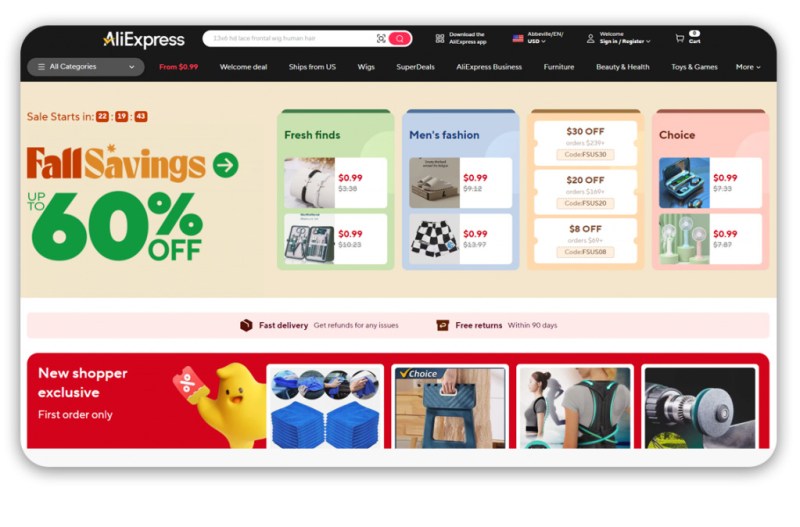
AliExpress —one of the largest dropshipping B2C eCommerce platforms
With dropshipping platforms, sellers can focus on marketing and customer service while the platform takes care of the rest.
Read more: How to Start Dropshipping on CS-Cart
Subscription-Based Models
The idea is to let customers repeat purchases. It makes sense for products that the target audience need regularly, for example, beauty products, streaming services, or regularly updated software products.
Bite is an example of such B2C eCommerce platform. It provides management tools to let business owners handle recurring transactions, shipping schedules, and user subscriptions at a time.
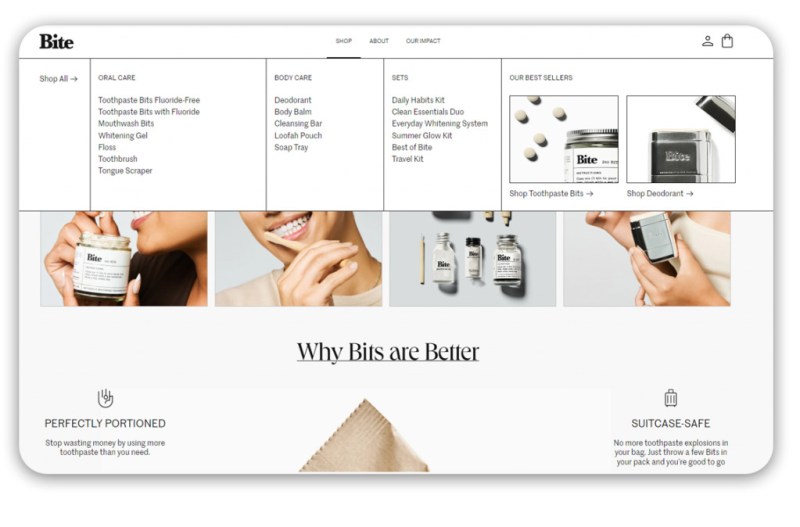
Bite — a subscription-based shop selling personal care products
Subscription models help a business owner build customer loyalty and generate predictable revenue flows.
Key Features of B2C eCommerce Platforms
Now, let’s have a look at baseline features to look for in a B2C eCommerce platform. They define how successful your project is going to be. Besides, a comprehensive toolkit ensures fast launch, platform flexibility, and options to scale, ultimately boosting sales performance and business growth, with built-in SEO tools to help improve search engine visibility.
Ease-of-Use
A clear and well-structured interface helps customers quickly navigate product categories and complete purchases without friction.
For store owners, B2C eCommerce platforms simplify setup with ready-to-use tools that require no technical knowledge. Strong B2C eCommerce features such as intuitive navigation and streamlined workflows directly support higher conversions and better customer engagement, backed by reliable customer support that helps resolve issues quickly.
Secure Payment
Having secure payment options integrated within your eCommerce platform helps build trust and loyalty with your customers, reducing the risk of fraud. Payment data safety is always a #1 priority. Experts say payment fraud can amount to $343 billion by 2027. Scammers create new fraudulent schemes to steal credit card data. So, having a digital shop with secure payment gateways is vital, supported by robust security features that keep customer data protected. First, it protects users’ sensitive data. Secondly, it helps build customer loyalty and reputation on the web.
You need to make sure a selected platform supports multiple payment options, like credit/debit cards, PayPal, and digital wallets, with strong encryption for secure payment processing.
Streamlined Order Processing
Efficient order processing is crucial for customer satisfaction. The store should automate as much of the process as possible, from order confirmation to shipping notifications. This reduces the risk of errors and ensures customers receive their products promptly, even without requiring technical expertise in managing the process.
Order Management System
An effective order management system helps keep track of orders from start to finish. It allows sellers to manage inventory, process returns, and handle customer inquiries all in one place, while ensuring processes are structured to protect customer data.
A B2C eCommerce platform with a robust system to manage orders streamlines your operations and helps you maintain high standards of exceptional customer service. This consistent service fosters trust and long-term customer relationships.
Virtual Cart
The virtual shopping cart is an essential component of any B2C website. The key criteria here are ease-of-use letting buyers quickly add, remove, or modify items before checkout. A well-designed cart also supports features like saving items for later and displaying shipping costs upfront.
Advanced Filtering Options
Accurate filtering options improve the customer journey. Advanced algorithms help customers pinpoint products quickly.
An effective B2C webshop offers more than just a platform for transactions; it creates a streamlined and engaging shopping experience. By incorporating features like advanced filtering options, intuitive navigation, and secure payment systems, a B2C webshop helps businesses attract and retain customers, boosting both sales and brand loyalty.
Features like search suggestions, product recommendations, and filtering by category, price, or ratings make it easier for buyers to find what they want. These tools increase the conversion rate and encourage customers to explore more goods in your store.
Advanced filtering options in CS-Cart B2C eCommerce platform
Mobile Optimization
During the 1st quarter 2024, 70% of all buyers used mobile devices to browse through online shops. Having a mobile-optimized store increases sales volume and drives more potential customers, improving search engine rankings and engaging users.
Moreover, it improves search engine rankings, enhances website performance, and engages users, making your store more visible to the target audience. For businesses looking to create seamless mobile experiences, investing in Mobile App Development Services can be a great way to enhance customer engagement and satisfaction.
Key Benefits of Having a B2C eCommerce Platform for Business
As for the main advantages, a B2C eCommerce platform ensures a wider outreach, helps to significantly expand sales, and increases the brand’s online visibility. The key benefits are as follows:
- Global Reach: with access to the global market, you may reach customers beyond your local area.
- Cost-Effective Operations: business owners do not need to hire staff or manage physical storefronts. A B2C platform helps lower overhead costs.
- Valuable Data Insights: brands gain transparency in purchasing and a better understanding of customer behavior, buying preferences, and trends that can guide marketing strategies and improve overall marketing effectiveness. It improves strategic decision-making and business development.
- 24/7 Sales Capability: customers shop whenever they want despite the location at their convenience. It boosts revenue and enhances customer satisfaction.
A well-built B2C online store makes it easier to deliver products to global audiences and adapt to changing customer expectations.
5 Popular B2C eCommerce Platforms to Choose from
Advanced solutions for building an eCommerce project may look the same. However, they do vary when it comes to critical details. Modern B2C eCommerce solutions empower businesses to deliver exceptional shopping experiences while simplifying back-end operations. By offering features such as streamlined order management, secure payment processing, and mobile optimization, these platforms help brands meet customer expectations and stay competitive in a rapidly evolving digital marketplace. Such capabilities significantly boost operational efficiency, freeing up resources for growth-focused activities. Each service provider aims to deliver a set of unique features. Learning them will let you decide on the best-matching option based on your specific business needs and expectations. This comparison will also help you evaluate which solution qualifies as the best B2C eCommerce platform for your goals.
1. CS-Cart
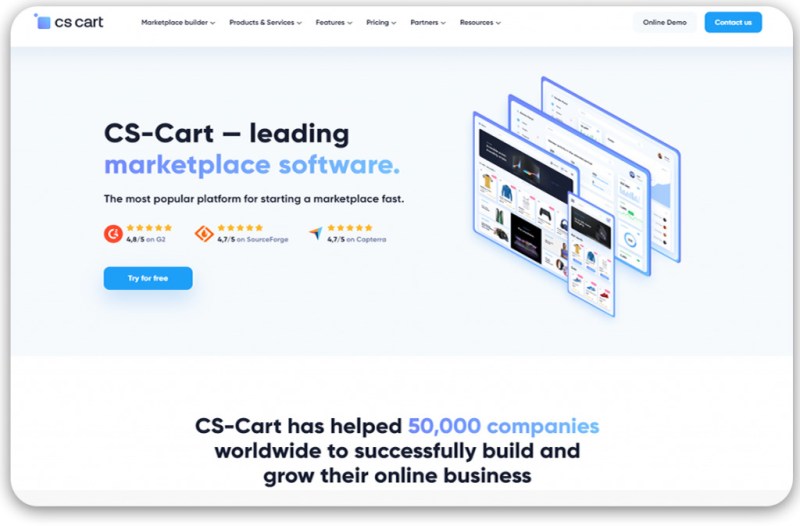
CS-Cart—a B2C eCommerce platform with multi-vendor feature
CS-Cart is a powerful B2C eCommerce software solution for launching digital stores and marketplaces of any size. With this platform, users get all the needed features in the pack with enhanced functionality to quickly design, set, launch and manage their B2C projects.
It comes with a multi-vendor feature to support an unlimited number of sellers in one place. The system delivers lots of flexibility with extra add-ons from the App Market.
Business owners may host their stores on their servers or use already-configured hosting from Scalesta. This is what makes CS-Cart very easy to set up and run quickly.
CS-Cart Pros:
- Out-of-the-Box Solution: CS-Cart is an all-in-one solution for building eCommerce projects of any size.
- Multi-Vendor Feature: users have the ability to create a marketplace website with an unlimited number of sellers offering their products on the same platform.
- Quick Start: no need to search for separate hosting. The product comes with a preconfigured hosting solution with fast loading, good performance, and sustainability.
- Perfect for Newbies: The intuitive admin panel has all the needed tools to design your storefront, manage products, configure general store settings, and promote your project with zero coding skills.
- App Store: a selection of extra add-ons and apps helps to quickly scale your digital shop.
- Analytics Tools: built-in statistics and reports help merchants uncover valuable insights to grow their business.”
CS-Cart Cons:
- Third-Party Integration: some third-party extensions might be difficult to implement.
- Paid Updates: to have a fully-featured web store with all systems running smoothly, you will need a paid update subscription.
- Long Response: it takes some time for support to provide feedback depending on the issue.
📌 CS-Cart offers dedicated platforms for both traditional online stores and marketplaces, all built on the same powerful core. This means you can start small with a cloud-based CS-Cart solution at an affordable price and easily scale up as your business grows. Seamlessly migrate to on-premises CS-Cart solutions or even the enterprise platform as your needs evolve.
Shopify
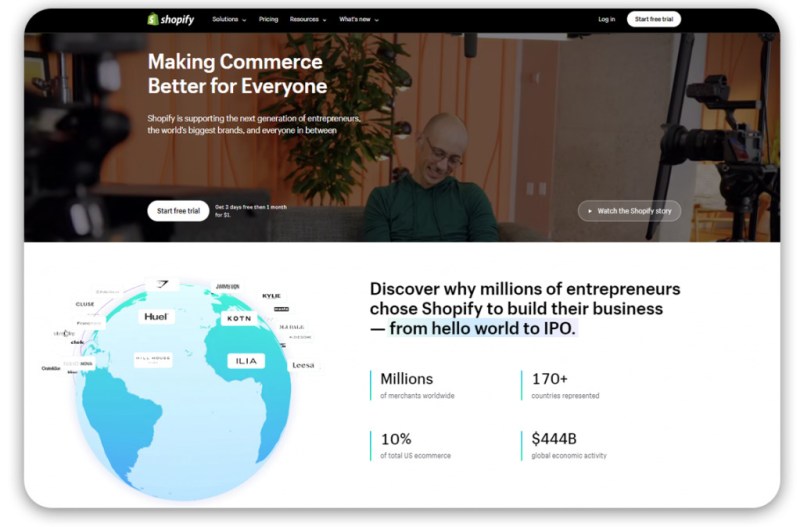
Shopify—one of the most popular eCommerce platforms
Initially, Shopify served small eCommerce business purposes aimed at creating simple websites or sell via social media platforms. Today, the solution comes as a time-tested instrument to launch solid marketplaces and distribute online products via multiple sales channels.
It offers broad integration capabilities with third-party and custom apps from the Shopify App Store to handle promotions, process payments, and more.
Shopify includes an intuitive content editor, pre-designed templates, analytics tools, and Shopify AR function to let users remotely feel the real size, color, and quality of each product. Still, some merchants find Shopify alternatives more suitable for their needs, especially those requiring advanced customization and self-hosting options. For ongoing updates, performance tuning, and technical support, partnering with a Shopify maintenance agency can ensure your store runs smoothly and efficiently.
Shopify pros:
- Ease of Use: launching a ready-to-go store will take several hours thanks to an intuitive editor.
- eCommerce Templates: responsive themes do not require customization. Users may add products and content to start selling right at once.
- App Store: a variety of widgets and add-ons to grow your store.
- Advanced eCommerce Functions: from dropshipping and abandoned cart recovery functionality to email marketing, reporting, multi-currency support, POS for physical stores, and Amazon integration.
Shopify cons:
- Third-Party Services: Some features may call for additional app installation.
- Higher Costs: Transaction fees when using third-party payment gateways.
- Support via phone is not available in some countries.
Squarespace
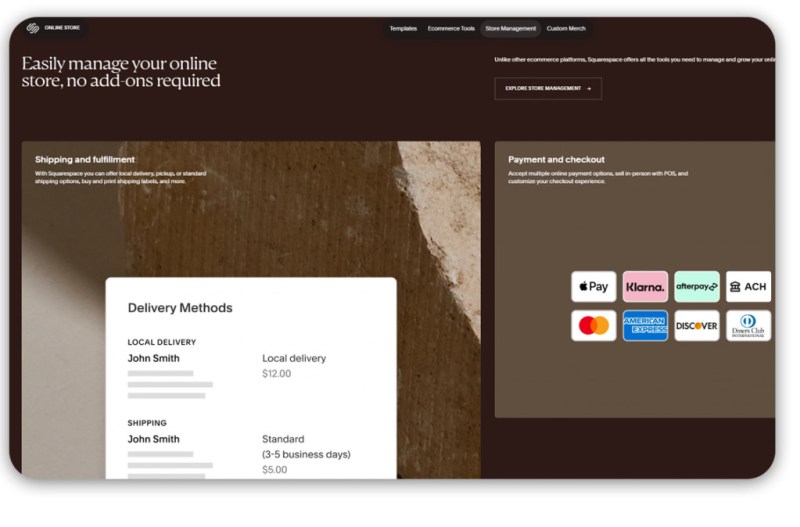
Squarespace—a simple website editor for small web shops
Squarespace used to be a tool to build content-oriented websites like blogs, not web shops. Today, it also supports basic eCommerce functionality, allowing users to build small online stores. The solution offers dozens of well-designed store templates with an integrated checkout page editor for building a unique checkout page.
The product offers baseline eCommerce features, analytics, and major payment options ready to connect. However, the overall functionality looks quite limited, especially if you target bigger projects like multivendor B2C eCommerce platforms or complex marketplaces. So, it works mainly for small businesses.
Squarespace Pros:
- Responsive and Stylish Templates: they are well-designed and run well on any device including tablets and smartphones.
- Mobile App: Squarespace has a custom mobile app that makes it possible to edit the storefront right from the smartphone.
- Built-In Features: each template comes with integrated features that you do not need to manage or configure manually.
Squarespace Cons:
- No App Store: the software does not have a typical app market with widgets and add-ons to download.
- Limited eCommerce Options: the platform does not deliver that eCommerce flexibility as in CS-Cart or Shopify.
- Plan Upgrade: you can get baseline features like scheduling, advanced analytics, and promotion tools with premium plans only.
BigCommerce
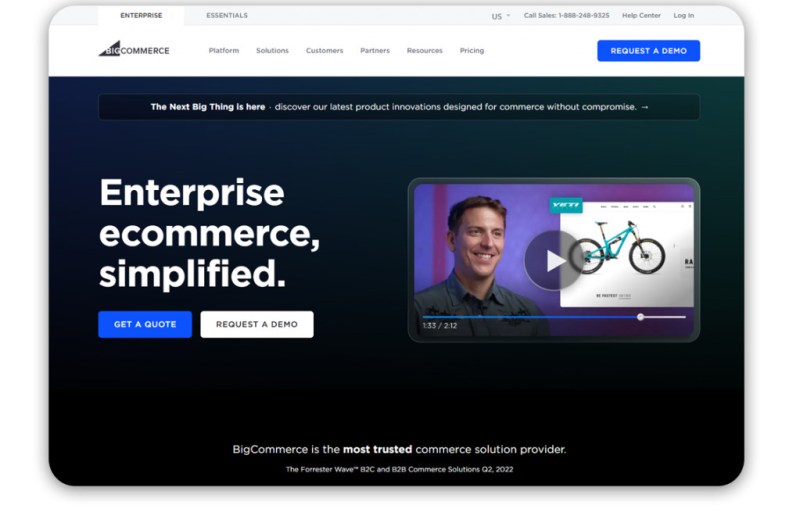
BigCommerce —a straightforward digital store builder.
BigCommerce delivers a bunch of baseline features to launch an online shop. The system evolved over the years delivering simpler ways to manage inventory, market and promote your digital shop.
However, some scathing reviews and complaints still take place. Mainly, users do not like limited template options and issues with store settings.
BigCommerce Pros:
- Ease of Use: looks quite easy to get started, but then things go more complex with store editing. Easy to use from the start.
- Responsive Themes: users may choose from a limited selection of responsive store templates designed pretty well.
- Integrations: the system offers around 600 add-ons and integrations.
- eCommerce Tools: business owners will find extended checkout, billing, and shipment features.
BigCommerce Cons:
- Limited free templates: despite good design and customization options, the template selection is limited.
- Complex Settings: users with zero technical background will find it hard to manage the store.
- Price: for such a limited functionality, BigCommerce plans appear overpriced for the functionality offered.
Wix
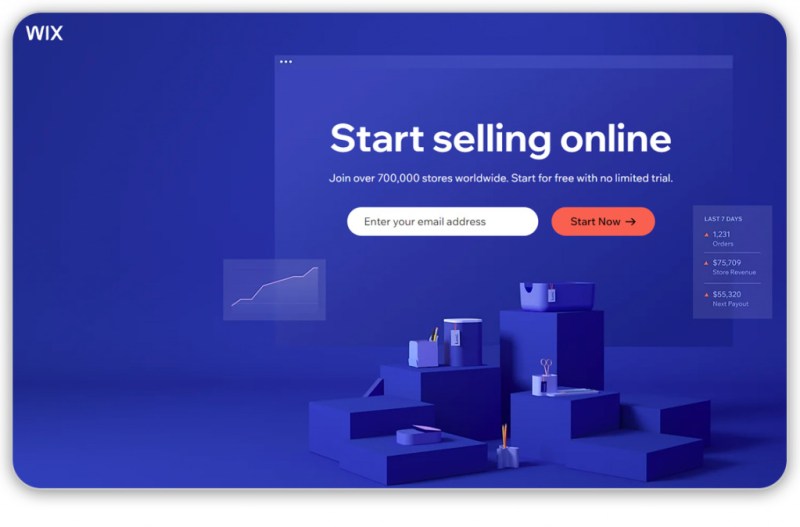
The platform follows the latest web-building trends relying on machine learning AI-based tool powered by Wix ADI. However, some critical issues make Wix a less favorable option for eCommerce. It might work great for a business website or a blog. When it comes to selling products online and scaling, it may not work out.
Wix Pros:
- Ease of Use: good for newbies with no coding and programming skills.
- App Market: a range of add-ons and widgets available on a free or paid basis.
- eCommerce, SEO, Marketing: built-in features and integration with Google Analytics tools such as a website traffic checker for merchants and marketers, who want to promote their projects and drive more traffic using SEO-optimized content.
Wix Cons:
- Limited Template Usage: Switching to a completely new template is limited and may require rebuilding parts of your design.
- Low Speed: the loading speed is not ideal, especially when you have thousands of products.
- Lacking Customization Options: no access to the template source code although you may still add a custom code to eCommerce sites using several ways.
When selecting a B2C eCommerce solution, businesses should focus on flexibility, integration capabilities, and scalability to ensure long-term growth.
The Bottom Line on Choosing B2C eCommerce Software
To get your solid and fully functional digital store that maximizes customer lifetime value, you need a good B2C eCommerce platform. Many basic tools offer only limited features, while advanced B2C eCommerce solutions provide the flexibility and power needed for long-term growth. As a result, many basic tools make it difficult for businesses to scale.
From this perspective, CS-Cart is a better option with its multi-vendor feature, advanced eCommerce tools, intuitive admin panel, and more instruments to grow your online project.
All CS-Cart Products and Services
- ★ CS-Cart Multi-Vendor: free online demo
- ★ CS-Cart Store Builder: free online demo
- ★ Mobile App: App Store, Google Play
- ★ Cloud Hosting: why it’s the best for CS-Cart
- ★ Customer Care: why it’s more than just a tech support
- ★ Upgrade subscription: select and reactivate

Den Simmon is a dedicated IT writer with 12+ experience of producing different pieces of content for eCommerce, Fintech, DevOps, and other emerging IT industries. For many years, Den has been examining and testing popular SaaS platforms and website builders to let users select solutions that meet their business needs.