

Driving traffic to an eCommerce site is no longer enough. Advertising costs continue to rise, and the real key to sustainable growth lies in optimizing what you already have. That means using proven tactics to increase conversion rate on eCommerce website rather than just chasing more traffic. In 2025, businesses that focus on conversion rate optimization (CRO) are better positioned to boost revenue, enhance customer experiences, and thrive in an increasingly digital-first economy.
Understanding and improving your conversion rate delivers outsized returns without increasing your marketing budget, whether you’re a startup or a scaling enterprise.
5 Quick Ways to Boost Your Conversion Rate
Here are five quick wins to boost your conversion:
- Place a compelling, clear call to action (CTA) above the fold — immediately guide visitors to the next step without requiring them to scroll or experience confusion.
- Leverage trust badges and guarantees near the “Buy” button — build instant credibility and reduce purchase anxiety exactly where it matters most.
- Optimize site speed and ensure a seamless mobile experience — even a 1-second of delay can impact conversions, especially on mobile devices.
- Enable guest checkout to minimize friction — streamline the buying process by removing unnecessary account creation barriers.
- Implement automated abandoned cart recovery with personalized emails and smart popups — recover lost sales by gently reminding visitors and offering incentives tailored to their behavior.
Let’s go deeper and understand why conversion rate matters, how to measure it, and the high-leverage benefits of optimization.
Why Conversion Rate Matters for eCommerce Growth
Your conversion rate represents the percentage of website visitors who complete a desired action on your site, typically making a purchase or taking another specific action. A high conversion rate means you’re turning more of your hard-earned traffic into paying customers. Focusing on user experience, trust, and relevance is one of the most effective ways to consistently increase conversion rates over time.
Here’s why that matters:
- Maximizes ROI. You’ve already paid for the traffic through ads, SEO, or social media. CRO ensures you squeeze the most value from every visitor.
- Enhances User Experience. A site optimized for conversion is typically also optimized for ease of use, trust, and clarity, resulting in happier customers.
- Scales Profitably. Once your funnel is optimized, scaling with paid traffic becomes more cost-effective and predictable.
- Improves Marketing Efficiency. Instead of needing twice as many visitors to make twice as many sales, you can double your sales with the same traffic by improving your conversion rate.
CRO in the Era of AI-Driven Search
Conversion rate optimization is becoming even more critical as search behavior changes. AI-driven search experiences and assistants increasingly provide answers directly in results, reducing the number of clicks that reach websites.
In this environment, sustainable growth depends less on traffic volume and more on how effectively you convert qualified visitors. CRO helps future-proof your business by extracting more value from every visit — even as traffic patterns evolve.
That’s why benchmarks are best used as reference points — while real success comes from improving performance against your own traffic and baseline.
What Is a Good Conversion Rate in eCommerce?
Conversion rates vary widely based on industry, product type, price point, and traffic source. That said, here are some benchmarks for 2025:
- Average conversion rate across industries: ~2.5% to 3.5%
- Top-performing eCommerce sites: 8% to 12%+
- Mobile vs. desktop: desktop tends to convert 2x better than mobile, though mobile optimization has narrowed this gap in recent years.
Keep in mind: “good” is relative. If your current conversion rate is 1.2%, then improving to 2.4% is a huge win. The key is constant iteration and benchmarking against your data.
How to Calculate Conversion Rate
The formula is simple:
Conversion Rate (%) = (Number of Conversions ÷ Total Visitors) × 100
For example:
If you had 500 sales from 25,000 visitors in a month, your conversion rate would be:
(500 ÷ 25,000) × 100 = 2%
You can calculate this per channel (e.g., email vs. paid ads), per device (mobile vs. desktop), or product page. This helps you identify where you’re leaking conversions and where to focus optimization efforts. Tracking performance by device, channel, or product page provides actionable insights to improve the conversion rate at every stage of the funnel.
Why Improving Conversion Rate Boosts Profit Without More Traffic
Improving your conversion rate doesn’t just increase sales — it enhances profit margins.
- Lower customer acquisition cost (CAC). If you’re converting more people, your cost per customer decreases — even if your ad spend remains the same.
- Higher revenue per visitor (RPV). Better conversions often pair with higher average order value and lifetime value.
- Fewer wasted clicks. Every visitor becomes more valuable, reducing the pressure to drive more traffic just to meet sales goals constantly.
In essence, boosting your conversion rate yields more with less — more sales, more profit, and greater scalability, all without incurring a significant expense on ads or content.
Build the Foundation: Analyze, Set Goals, Understand Users
Before you can optimize effectively, you need a solid foundation. That means defining your objectives, understanding your users, and identifying what’s currently working — and what’s not. Without these fundamentals, CRO becomes a matter of guesswork. A solid foundation ensures that real data, not assumptions, guide your conversion rate optimization strategy. In 2025, data-driven decision-making is no longer optional; it’s the backbone of any successful eCommerce strategy. Effective conversion optimization starts with clear goals, clean data, and a deep understanding of user behavior.
Define Your Website Goals
Start by asking: What do I want users to do on my website?
For most eCommerce businesses, the primary goal is a completed purchase. But you might also have secondary goals like:
- Adding items to a wishlist or cart
- Signing up for a newsletter
- Downloading a lead magnet or coupon
- Starting a chat with support
- Creating an account
Define both macro-conversions (such as a purchase) and micro-conversions (steps that lead up to the purchase). This allows you to track user intent at multiple stages of the funnel and spot drop-off points earlier.
Analyze Incoming Traffic and User Behavior
Utilize tools such as Google Analytics 4, Hotjar, Microsoft Clarity, or Mixpanel to gain insight into how users interact with your site. Focus on:
- Bounce rate and exit pages – Where do users leave most often?
- Conversion funnels – Where in the process are people getting stuck?
- Device and browser performance – Are mobile users struggling more?
- Page speed and technical issues – Are slow load times killing conversions?
- Broken links – Are users clicking on pages that no longer work?
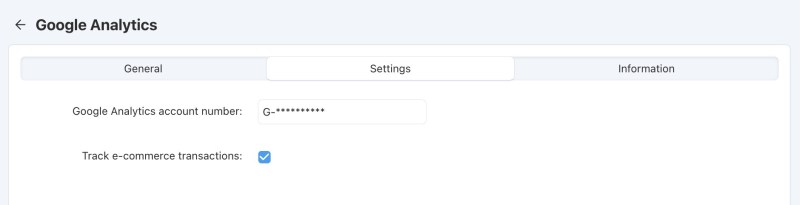
If you’re using eCommerce platforms like CS-Cart, you’ll benefit from its robust built-in reporting features and seamless integrations with Google Analytics and other CRO tools, making it easier to analyze traffic and set data-driven goals.
Run Competitor Research and Spot Conversion Gaps
Competitor analysis often reveals overlooked opportunities for eCommerce conversion rate optimization, especially in UX and checkout flows. Your competitors can be a goldmine of insight. Study their websites and customer journeys. Look for:
- Layout and UX choices
- Copy and messaging tone
- Pricing and value propositions
- Trust signals (e.g., reviews, badges, guarantees)
- Checkout flow
Use tools like BuiltWith, SimilarWeb, or Wappalyzer to identify the tech stacks and optimization tools they’re using. Spot the gaps in your own experience compared to theirs — even minor changes, such as how they handle shipping information or display product photos, can reveal opportunities. Analyzing competitor strategies often uncovers simple yet effective ideas for improving conversion rates on your site. It’s also one of the fastest ways to collect eCommerce landing page ideas you can test on your own homepage, category pages, and product pages.
Talk to Customers to Understand Friction Points
Data tells you what’s happening. Talking to customers tells you why.
Use:
- On-site surveys (e.g., “What stopped you from checking out today?”)
- Post-purchase customer interviews
- Abandonment emails with open-ended questions
- Customer service logs and chat transcripts
Ask questions like:
- What almost stopped you from buying?
- Was anything on the site confusing or frustrating?
- What made you trust us (or hesitate)?
This qualitative feedback uncovers hidden objections, UX problems, or messaging mismatches that raw data can’t reveal.
Improve Your Value Proposition and Website Messaging
Once you’ve laid the groundwork by understanding your users and their behavior, the next step is refining how you communicate your value. In 2025, shoppers are more discerning, skeptical, and informed than ever. Your value proposition and website messaging must cut through the noise instantly, or you risk losing visitors within seconds.
Great messaging doesn’t just inform — it persuades, reassures, and compels action. Clear, benefit-driven messaging is crucial for improving website conversion rates and reducing bounce rates.
How to Improve Your Value Proposition
Your value proposition is the core reason someone should buy from you instead of a competitor. It should speak directly to the needs, fears, and desires of your potential customers, helping them choose you with confidence. It should answer the question: “Why should I buy this, and why from you?”
To strengthen your value proposition:
- Be specific. Avoid generic claims like “high quality” or “great service.” Say what makes your quality better or how your service stands out.
- Make it immediate. Highlight instant benefits like fast shipping, easy returns, or time saved.
- Highlight what’s unique. Do you offer ethically sourced materials? Lifetime guarantees? Customization? Make that front and center.
- Test different value angles – Some customers respond to price, others to quality, convenience, or brand ethos. Use A/B testing to find which message resonates most.
Read more: Top 5 Writing Elements to Go Through A/B Testing
Put your value proposition above the fold, on product pages, and throughout your site — not just your homepage.
Communicate Benefits, Not Just Features
Features describe what a product is. Benefits describe what it does for the customer.
Example:
- Feature: “Made from organic cotton.”
- Benefit: “Soft, breathable comfort without the chemicals — good for your skin and the planet.”
People don’t buy products — they buy better versions of themselves, solutions to problems, and feelings of security, confidence, or joy. Frame your copy around what customers get, not just what the product has. Use bullet points to clearly list key benefits—this improves readability and helps users absorb the value at a glance.
Use this simple formula to rewrite feature-heavy copy:
“Which means…”
For every feature you list, ask yourself: “Which means what for the customer?”
Address Objections Early
Every customer has doubts before making a purchase. Your job is to surface and resolve them proactively.
Common objections include:
- “What if it doesn’t fit?”
- “Is this a legit company?”
- “How easy is it to return?”
- “Can I trust the quality?”
Tackle these by:
- Including FAQ sections near CTAs
- Showing reviews and user-generated content early in the funnel
- Offering guarantees, free returns, or try-before-you-buy options
- Displaying trust badges, shipping times, and secure checkout messages clearly
The earlier you address objections, the more confidence you build — and the more likely customers are to convert.
Eliminate Jargon and Simplify Language
In 2025, attention spans are short, and users expect instant clarity. Complex, technical, or overly clever copy often confuses more than it impresses.
To optimize your language:
- Use short sentences and plain words
- Avoid industry terms unless your audience uses them too
- Use active voice (“You get fast delivery” vs. “Fast delivery is provided”)
- Use tools like Hemingway or Grammarly to test readability
- Write like you talk — natural, conversational tone works best for trust
Remember: your goal isn’t to sound smart. Your goal is to make the customer feel smart for choosing you.
Optimize Key Pages to Increase Conversions
Even small tweaks to your most-visited pages can help improve your conversion rate and drive more revenue from existing traffic. In 2025, customer expectations around page experience, trust, and clarity are higher than ever. That means your homepage, category pages, product pages, checkout, and even your thank you page need to be optimized not just for usability, but for persuasion.
Let’s break down how to improve each of these high-impact pages to increase website conversion and user engagement.
Homepage
Your homepage is your digital storefront — it should instantly communicate who you are, what you sell, and why someone should stay.
Homepage optimization tips:
- Clear value proposition above the fold — no carousels, no clutter
- Strong, benefit-oriented hero headline
- Visual hierarchy — guide users with layout and color (CTAs should stand out)
- Prominent CTAs — shop now, view collections, or sign up
- Navigation simplicity — fewer options, clearer paths
- Trust signals — customer reviews, press mentions, guarantees
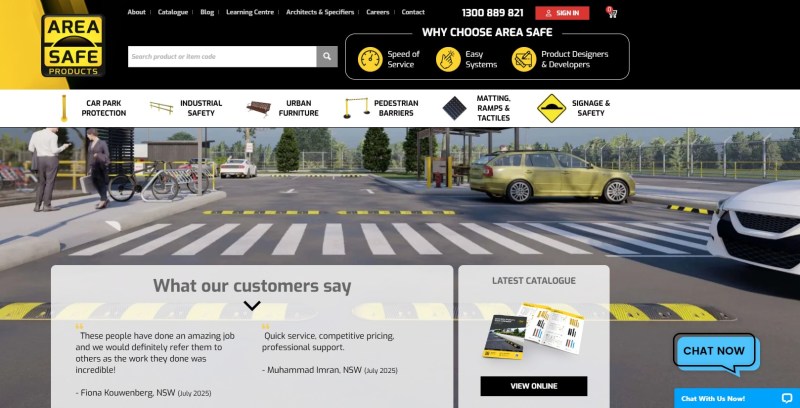
AreaSafe B2B store homepage
Think of the homepage as the gateway to conversion. It should lead users into your funnel — not act as a catch-all.
Category Pages
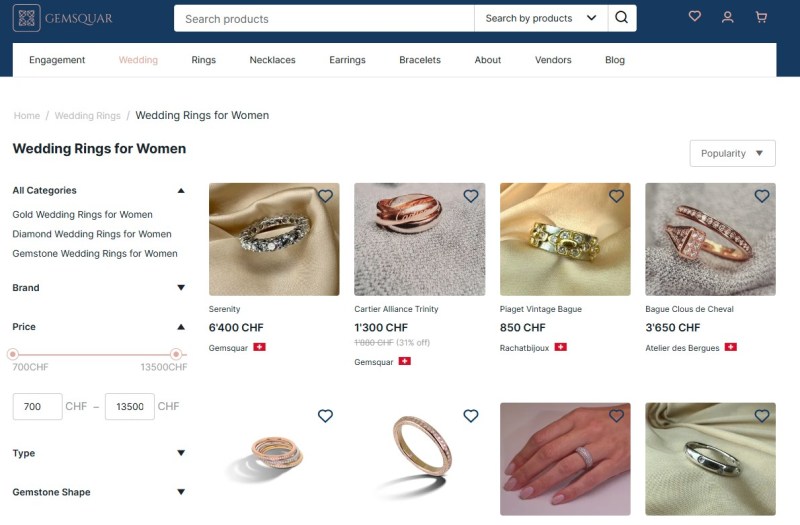
Gemsquar collections
Category (or collection) pages help shoppers browse and compare. However, they are often treated like basic product lists, missing the opportunity to educate and guide.
Category page optimization tips:
- Filter and sort tools — by price, size, color, etc.
- Quick views or previews — minimize clicks to explore products
- Include benefit-driven copy — explain what the category offers or solves
- Highlight bestsellers or featured items
- SEO-friendly headers and descriptions — help customers and search engines
These pages are also great for surfacing promotions or nudging urgency with low-stock labels.
Product Pages
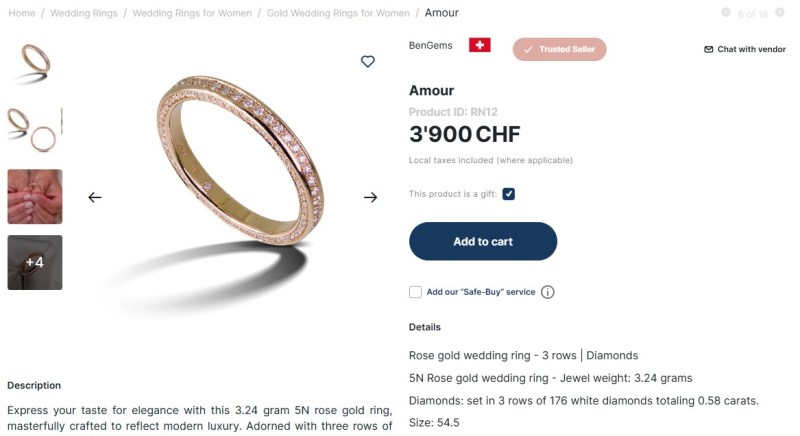
Your product page is the make-or-break moment and one of the most important areas to increase eCommerce conversion rate. It’s where visitors decide whether or not to buy.
Product page optimization tips:
- High-quality images & videos — show the product in use and at different angles
- Transparent pricing & offers — include any discounts, bundles, or subscriptions
- Persuasive product descriptions — benefits first, features second
- Social proof — reviews, ratings, customer photos
- Delivery & return info — up front, not hidden at checkout
- Urgency/scarcity — “Only 3 left,” “Ships today,” “Selling fast”
Also, test sticky “Add to Cart” buttons — especially on mobile, where screen space is tight.
Cart and Checkout
Most cart abandonment happens here. In 2025, a fast, frictionless, and secure checkout experience is critical. For most stores, checkout improvements deliver the biggest ROI in eCommerce conversion optimization.
Cart and checkout optimization tips:
- Guest checkout option — don’t force account creation
- Progress indicators — show how many steps remain
- Auto-fill and multiple payment options — Apple Pay, Google Pay, PayPal, BNPL
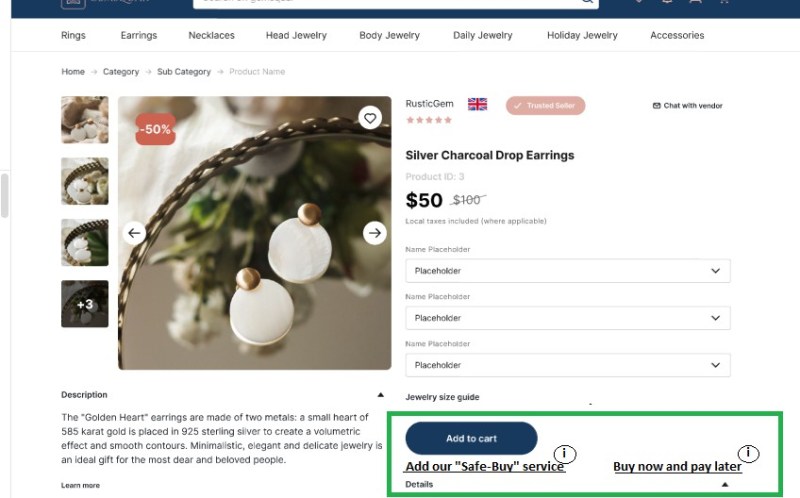
BNPL as implemented on a CS-Cart-based store
- Trust signals & security badges — ease hesitation at the payment step
- Transparent costs — no surprise fees at the end
- Exit-intent offers — try showing a discount or free shipping offer if they move to close the tab
Streamlining checkout is often the single highest ROI optimization you can make.
If your goal is to increase checkout conversion rate, focus first on payment friction, form length, and total cost transparency.
Wallet-First Checkout Strategy
In 2025, the most effective checkout experiences prioritize a small set of high-impact payment methods instead of offering every available option. Digital wallets reduce friction, shorten checkout time, and perform особенно well on mobile devices.
Rather than expanding payment lists indiscriminately, test wallet-first checkouts by market and device. Evaluate their impact not only on conversion rate, but also on average order value, refunds, and long-term profitability.
“Thank You” Page
Most brands treat the “Thank You” page as a dead end. In reality, it’s a prime opportunity to increase customer lifetime value (CLV).
Thank you page optimization tips:
- Encourage sharing — offer a referral bonus or social share buttons
- Cross-sell or upsell — “You might also like…”
- Request a review or feedback
- Offer a discount on next purchase
- Guide them to create an account — if they checked out as a guest
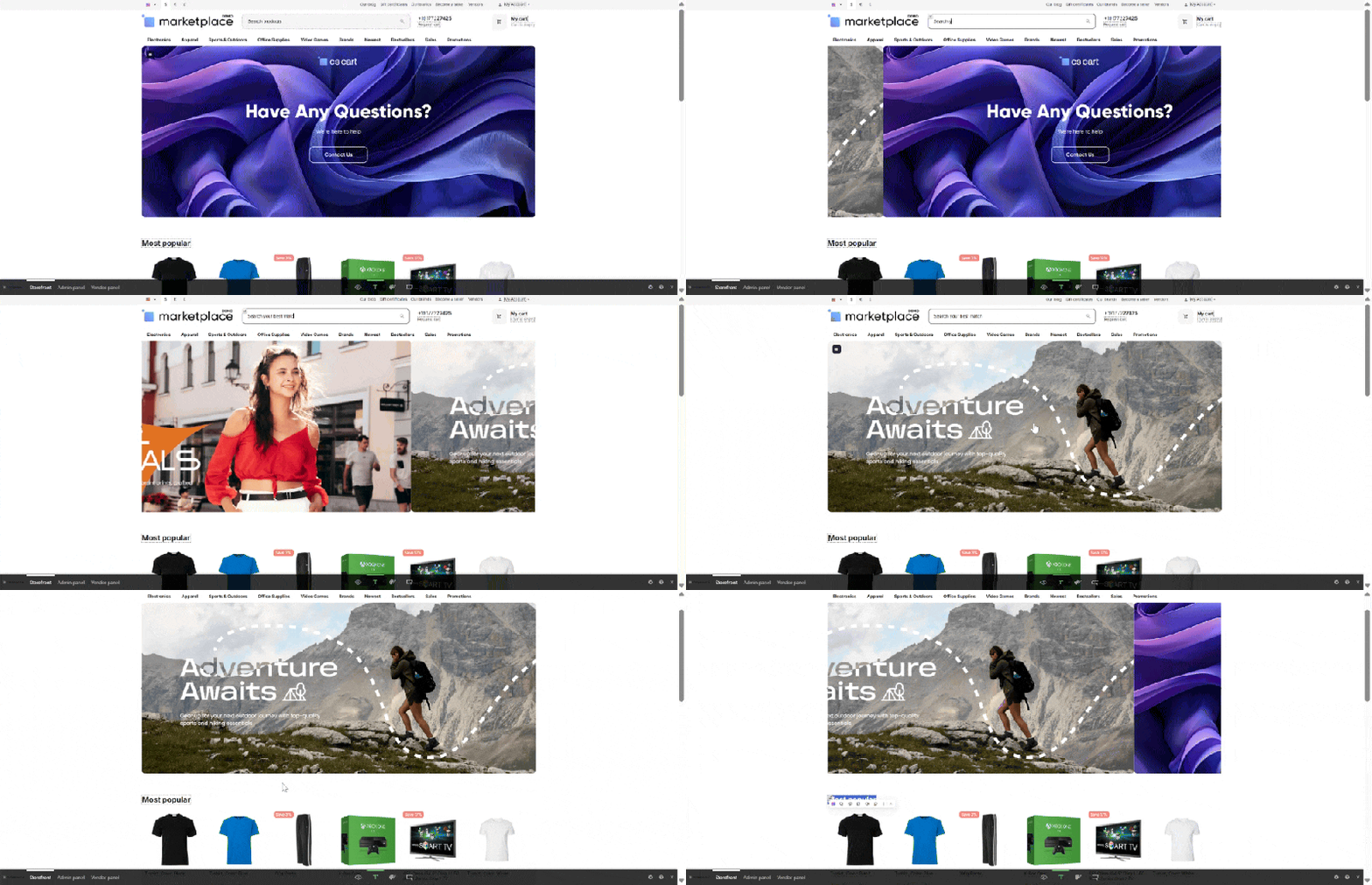
CS-Cart provides user-friendly customization options for your homepage, category pages, and product pages, allowing for quick adjustments to layouts, CTAs, and product displays that can significantly impact conversions.
Use Trust Signals to Build Credibility
No matter how sleek your design or persuasive your copy, if visitors don’t trust your brand, they won’t convert. In 2025, with consumers increasingly wary of scams, data privacy breaches, and fly-by-night online stores, building trust is no longer optional — it’s essential.
Trust signals reassure customers that your business is legitimate, trustworthy, and worth doing business with. Positive reviews serve as powerful trust signals that reduce doubt and encourage faster decision-making. Here’s how to incorporate them effectively across your site.
Add Customer Testimonials and Reviews
User-generated content (UGC) is one of the most powerful trust-building elements in e-commerce. Recent studies show that over 90% of online shoppers read reviews before making a purchase.

UGC as implemented on a CS-Cart based store (Northskull)
How to leverage reviews effectively:
- Star ratings visible on category and product pages
- Detailed customer reviews with pros/cons and photos
- Video testimonials or unboxing experiences
- Verified vendor tags to validate authenticity
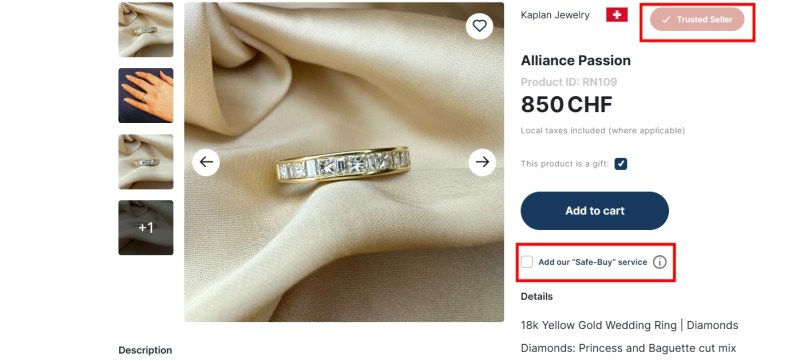
Gemsquar, a CS-Cart-based jewelry marketplace, uses Trusted Seller tag to highlight trust
- Review sorting/filtering — let users see what matters most to them (e.g., fit, quality, durability)
Also, don’t hide your 4-star reviews. A mix of positive and neutral reviews often appears more credible than a perfect 5.0 average.
Display Social Proof and Success Stories
Humans follow the crowd — and that’s where social proof comes in.
Ideas for using social proof:
- “Over 50,000 customers served”
- “Bestseller this week”
- “As seen in…” media mentions or influencer shout-outs

Urbankissed, a slow fashion marketplace on CS-Cart
- Real-time activity: “Emily from NY just bought this item” (use responsibly)
- Case studies or customer success stories (especially for B2B or high-ticket items)
Integrating this proof subtly — near product pages, CTAs, or checkout — creates confidence without overwhelming the page.
Use Security Badges and Clear Return Policies
Your checkout process must look and feel secure. A single element that causes doubt — like a missing padlock icon or unclear return policy — can kill conversions in the final step.
Best practices:
- SSL certificates — make sure HTTPS is enforced across your site
- Security icons — McAfee Secure, Norton Secured, or similar
- Accepted payment logos — Visa, PayPal, Apple Pay, etc.
- Privacy assurances — explain what happens with user data
- Return and refund policies — visible before checkout, in simple language
Ensure your site appears trustworthy both visually and procedurally. A secure experience isn’t just about tech — it’s about perception.
Offer a Risk-Free Guarantee
Reducing perceived risk makes buying easier. Especially for first-time customers, an explicit guarantee can be the final nudge to conversion.
Examples of high-converting guarantees:
- 30-day money-back guarantee
- Free returns, no questions asked
- Try it for 14 days — love it or get a full refund
- Fit guarantee (especially for clothing, shoes, or eyewear)
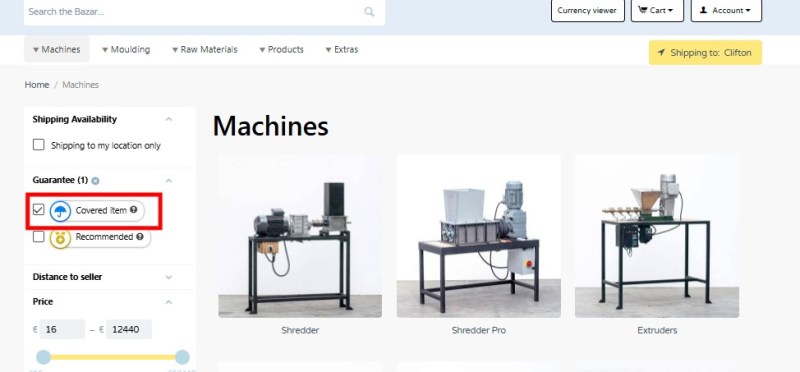
Precious Plastic Bazar, a CS-Cart P2P marketplace, applies Covered Item filter for products with full money-back guarantee in case of non-delivery.
Be sure your guarantee is visible (on product pages and near CTAs), and that the language is reassuring, not legalistic.
Improve Website UX and Navigation
A beautiful website means nothing if users can’t find what they’re looking for — or worse, get frustrated and leave. In 2025, users expect lightning-fast, intuitive browsing experiences that work seamlessly across devices. Clean, distraction-free UX is no longer a nice-to-have — it’s directly tied to your conversion rate.
Here’s how to fine-tune your website’s user experience (UX) and navigation to support conversions.
Make Site Navigation Seamless
Navigation should feel effortless, not like solving a puzzle. Confusion is the enemy of conversion. Simplifying navigation structure and guiding users intuitively through your site is a proven way to boost conversion rate.
Best practices for seamless navigation:
- Keep menus intuitive and straightforward — limit main categories to 5–7 items
- Use clear, descriptive labels — avoid vague terms like “Stuff” or “More”
- Add a sticky header — so users can access the menu, cart, and search anywhere
- Use breadcrumbs — help users understand where they are on the site
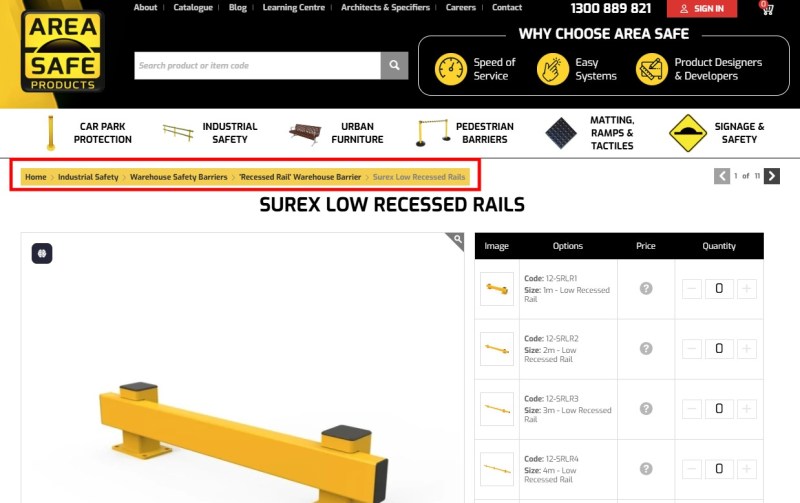
Area Safe, a B2B shop, benefits from the CS-Cart built-in breadcrumb functionality, that helps users see where they are on the page
- Highlight key pages — like new arrivals, bestsellers, and sale items
Also, make sure your site search is fast, typo-tolerant, and offers predictive suggestions.
Internal search is one of the strongest conversion drivers in eCommerce. Users who rely on site search typically show higher purchase intent — but only if search results are relevant, fast, and helpful.
High-performing search experiences in 2025 include synonym handling, typo tolerance, smart zero-results pages, and merchandising rules that prioritize in-stock and high-margin products. Boosting bestsellers, seasonal items, or fast-shipping products within search results can further increase search-to-cart rates.
To measure impact, track metrics such as search usage rate, zero-results rate, and search exit rate. These indicators often surface conversion friction earlier than overall site metrics.
That’s why on-site search optimization often delivers outsized CRO wins compared to many cosmetic UI tweaks.
Reduce Distractions and Visual Noise
Your website should guide the user toward a clear goal. Customers prefer simple, intuitive navigation that helps them quickly find what they’re looking for. Excessive pop-ups, autoplay videos, or a cluttered layout dilute focus and harm conversions.
To declutter your design:
- Limit pop-ups to well-timed, relevant offers
- Avoid autoplaying media unless necessary
- Use fewer competing CTAs — every page should have one primary action
- Keep sidebars minimal and product pages clean
- Cut any content that doesn’t directly support the customer journey
Ask: Does this element help the user take action, or distract them from it? If it’s the latter, consider cutting it or redesigning it.
Use Visual Hierarchy and Whitespace Effectively
Good design isn’t about cramming more in — it’s about organizing information, so users can process it quickly and intuitively.
How to use visual hierarchy:
- Make CTAs bold, large, and give them clear contrast with the background
- Use headings, subheadings, and paragraph structure for scannability
- Position high-value content (like benefits or reviews) near CTAs
- Use color strategically — bright for actions, muted for secondary info
- Ensure consistency in fonts, button styles, and spacing
Whitespace isn’t empty — it’s a tool. It gives your content room to breathe, reduces cognitive load, and naturally draws attention to key elements like calls-to-action or product details.
Optimize for Accessibility and Readability
A truly optimized site serves all users — including those with disabilities, older customers, and anyone browsing on a small screen or under poor lighting.
Accessibility and readability tips:
- Ensure high contrast between text and background
- Use legible fonts, ideally 16px or larger for body text
- Add alt text to all images
- Make buttons large enough to tap easily on mobile
- Support keyboard navigation and screen readers
- Avoid flashing or moving elements that can cause disorientation
Not only does this improve UX and inclusivity — it’s also good for SEO and legal compliance (like WCAG and ADA standards). If you want a quick way to spot common issues, run a scan with a website accessibility checker to get a baseline report before you start making UX changes.
Accessibility directly influences conversion performance. The current WCAG 2.2 guidelines emphasize clearer focus states, better form error handling, adequate target sizes, and predictable interactions — all critical elements in checkout and form-heavy flows.
Improving accessibility often improves conversion rate as a side effect. Clearer layouts, readable contrast, and intuitive keyboard navigation reduce friction for all users, not just those with disabilities.
Boost Website Performance
Even the most persuasive design and messaging won’t matter if your site is slow, clunky, or inconsistent. In 2025, performance is no longer a technical afterthought — it’s a core driver of conversion rate. Speed, relevance, and seamless user flow are now critical expectations, especially with mobile-first browsing dominating the landscape. Faster-loading websites with fewer technical obstacles naturally lead to more conversions, especially on mobile devices.
Here’s how to boost your website’s performance to increase conversions.
Improve Page Load Time
Page speed isn’t just about user experience — it directly impacts your bottom line. Studies show that each second of delay can reduce conversions by up to 20%. Page load time is directly tied to bounce rates and remains one of the top factors to increase eCommerce conversion. Google’s Core Web Vitals continue to reward fast, responsive sites with better rankings and visibility. Monitoring Core Web Vitals for eCommerce is especially important on product, cart, and checkout pages.
Ways to improve load times:
- Compress images and use modern formats like WebP or AVIF
- Minimize JavaScript and CSS — eliminate unused code
- Enable lazy loading for below-the-fold content
- Use a CDN (Content Delivery Network) to serve files faster globally
- Implement server-side rendering or static site generation for dynamic content
- Reduce third-party scripts (especially chat, tracking, and ad tools)
Test your site regularly with tools like Google PageSpeed Insights, GTmetrix, or Lighthouse.
INP: The Core Web Vitals Metric That Matters in 2025
When evaluating performance in 2025, pay close attention to Interaction to Next Paint (INP). Google has replaced First Input Delay (FID) with INP as a Core Web Vitals metric, shifting the focus to how responsive a page feels during real user interactions.
For eCommerce sites, poor INP scores often originate from heavy JavaScript on product pages, carts, and checkout steps. Optimizing third-party scripts, UI animations, and payment widgets can significantly improve perceived speed — and directly impact conversion rates.
Optimize for Mobile-First Experience
Mobile traffic accounts for over 60% of eCommerce visits in 2025 — but mobile conversion rates still lag behind desktop. Closing that gap starts with designing for mobile first, not just adapting desktop layouts. Mobile-first design not only improves usability—it also leads to higher conversion rates among smartphone users.
Mobile-first optimization tips:
- Use responsive design that adjusts cleanly across screen sizes
- Prioritize speed and thumb-friendly navigation
- Keep forms short and inputs easy to tap
- Make CTAs large, sticky, and positioned prominently
- Eliminate horizontal scrolling and fixed-width elements
- Simplify mobile menus — no nested categories three layers deep
Think “finger and thumb” — your mobile site should be usable with one hand, on the go.
Align Landing Pages with Ads and Search Copy
High-converting traffic can still bounce if the landing page doesn’t align with the user’s intent. This is a core landing page optimization principle: message match reduces bounce and increases conversion. Misaligned messaging confuses and undermines trust, especially when users come from paid ads or search results.
To improve alignment:
- Mirror headline language from your ads or search listings
- Highlight the same benefits or offers that got the click
- Eliminate generic homepages as ad destinations — use dedicated landing pages
- Personalize the experience based on campaign, device, or audience
- Use a single, clear CTA that matches the ad’s promised action
Consistency from ad to landing page builds trust and keeps users on the path to conversion.
Avoid Heavy Popups and Intrusive Interstitials
While popups can work when used well, aggressive or poorly timed overlays are a fast way to kill the user experience, especially on mobile. Google penalizes intrusive interstitials that disrupt access to content.
To make popups work without hurting UX:
- Use exit-intent popups on desktop
- Delay popups until users scroll or spend 20–30 seconds on page
- Offer real value — discount, freebie, early access — not just “join our list”
- Ensure easy dismissal (clear “X” and no hidden close buttons)
- Avoid stacking popups — one offer per session is enough
Keep the focus on conversion, not interruption. The more seamless and user-friendly your popup strategy, the better it performs.
Create High-Converting CTAs
Your call-to-action (CTA) is where the conversion happens. It’s the final nudge that turns a visitor into a customer, so getting it right is critical. Well-designed, persuasive CTAs are one of the most effective tools for instantly increasing website conversions. In 2025, with consumer attention more fragmented than ever, CTAs must be immediate, irresistible, and crystal clear.
Let’s break down how to design, write, and optimize CTAs that convert.
CTA Design: Color, Size, and Contrast
Your CTA needs to stand out — visually and hierarchically. A user should never have to search for how to take the next step.
Best practices for CTA design:
- Use contrasting colors — the CTA should pop against the background (e.g., orange on blue, green on white)
- Make it big enough — but not overwhelming. It should command attention without looking desperate
- Use consistent styling — don’t confuse users with different button shapes or placements across pages
- Add white space around it — give the CTA breathing room so it doesn’t get lost in clutter
- Make it sticky on mobile — a persistent CTA bar always keeps conversion one tap away
Use A/B testing to find your optimal combination of size, color, and placement.
CTA Copy That Drives Action
Button copy should do more than say “Submit” or “Buy Now.” Great CTA copy is specific, action-driven, and benefit-focused.
High-converting CTA copy examples:
- “Get My Free Sample”
- “Unlock 20% Off Today”
- “Start My Free Trial”
- “Add to Cart — Ships Today”
- “Reserve Your Spot Now”
Use verbs that encourage momentum: get, claim, start, discover, unlock. And make sure the CTA communicates what happens after the click — eliminate ambiguity.
Pro tip: personalizing CTA copy (“Start your free trial”) can improve conversions, especially on landing pages.
Create Urgency and Scarcity (FOMO Tactics)
People hate missing out. Done well, urgency and scarcity tap into emotional triggers that speed up decision-making.
Ways to build urgency into CTAs:
- Add time-based phrases:
- “Today only”
- “Ends at midnight”
- “Hurry — sale ends soon”
- Show stock levels or purchase activity:
- “Only 3 left in stock”
- “5 others have this in their cart”
- Use countdown timers on landing pages or in emails
- Highlight limited-time bonuses (e.g., “Buy now to get a free gift”)
Just make sure it’s authentic. Fake urgency (“Only 1 left!” when it’s not true) erodes trust fast in 2025’s transparency-driven market.
You may be interested in reading: How to Grow Your Online Marketplace with Social Proof
Offer Discounts, Free Shipping, or Bonuses
When a CTA includes an incentive, conversion rates often rise significantly — especially for first-time buyers who need an extra push. Customers often compare prices across several sites, so clearly highlighting savings and added value gives you a competitive edge.
Popular incentive-based CTA formats:
- “Get 15% Off — First Order Only”
- “Add to Cart & Get Free Shipping”
- “Subscribe Now & Receive a Bonus Gift”
- “Join & Save — $10 Off Instantly”
- “Claim Your VIP Offer Inside”
Make sure the incentive is clear, relevant, and immediate. Positioning the offer as a good deal helps increase urgency and improves conversion rates, especially for first-time buyers. Don’t bury the terms or make users jump through hoops. The value should be obvious at the moment of the click.
Recover Lost Conversions
No matter how optimized your site is, some visitors will leave without completing their purchase. The average cart abandonment rate still hovers around 70% in 2025. That means most of your potential revenue is walking out the (virtual) door.
But not all hope is lost. With the right recovery strategies, you can attract hesitant shoppers, win over skeptics, and convert drop-offs into sales.
Tactics to Reduce Cart Abandonment
Before trying to recover abandoned carts, focus on preventing abandonment in the first place.
Key tactics:
- Show total costs upfront — hidden fees at checkout are the #1 reason for abandonment
- Offer guest checkout — don’t force users to create an account to buy
- Display trust signals at checkout — security badges, return policies, support info
- Use progress indicators — show how many steps remain in the checkout process
- Enable cart-saving — allow users to return later with their items still in cart
- Add urgency and scarcity — low stock alerts or “complete order in X minutes” timers
- Include a mini-cart dropdown — show cart details without forcing a full page refresh
Small UX tweaks here can yield big results. Simplify the path from cart to confirmation.
How to Create Effective Exit-Intent Popups
Exit-intent popups detect when users are about to leave the site and deliver one last compelling message. When done correctly, they reduce bounce rates and capture leads that would otherwise be lost.
Best practices:
- Offer a strong incentive — e.g., “Wait! Here’s 10% off your first order”
- Keep the design clean and focused — one message, one clear CTA
- Use urgency phrases — “Before you go…” or “This deal disappears in 5 minutes”
- Allow easy dismissal — don’t trap users with aggressive popups
- Split-test different offers — percentage off, free shipping, bonus gifts, etc.
Pro tip: Pair your popup with email capture, so if the user doesn’t convert immediately, you can follow up later.
Win-Back Strategies and Abandoned Cart Emails
Abandoned cart emails remain one of the highest-performing recovery tools — often achieving 10–20% recovery rates when done right.
Components of a high-converting cart recovery email:
- Personalized subject line — “You left something behind, Alex”
- Image and name of the abandoned item
- Clear CTA to return to cart or checkout
- Time-sensitive discount or offer
- Multiple follow-ups — typically 3 emails spaced out over 24–72 hours
- Add trust elements — e.g., “Still not sure? Read reviews from other happy customers.”
For even better results, include:
- Live cart restoration (1-click return to checkout)
- SMS follow-ups for mobile-first users
- Browser push notifications as a secondary reminder channel
Recovering abandoned carts is one of the easiest ways to increase revenue without acquiring new traffic — it’s about closing the loop on interest that already exists.
Personalize and Automate for Better Conversions
In 2025, generic shopping experiences will no longer suffice. Effective website personalization uses behavior signals to tailor content, offers, and recommendations. Customers expect personalized, relevant interactions at every stage of their journey — and they expect them to be instant. By combining behavioral data with automation and AI, you can deliver tailored content, offers, and support that feel one-to-one at scale.
Here’s how to effectively personalize and automate your conversion strategy.
Use Behavioral Data to Personalize User Journeys
Personalization starts with understanding user behavior — what they browse, how they interact, where they drop off, and what drives them to convert.
Tactics for behavioral personalization:
- Show different homepages or banners based on user interests or location
- Offer product suggestions based on browsing or cart history
- Trigger specific popups or email flows based on actions (e.g., product viewed but not purchased)
- Highlight recently viewed items or saved carts
- Adjust navigation or promotions for returning vs. new visitors
When users feel like your site “gets” them, they’re far more likely to convert.
Dynamic Content and Smart Product Recommendations
Gone are the days of static websites. Today, the best eCommerce stores dynamically adjust their content to each user, improving relevance and driving conversions.
Dynamic personalization strategies:
- “Recommended for you” product carousels based on past behavior
- Geo-targeted banners (e.g., weather-appropriate products, local shipping info)
- Custom landing pages for different audience segments
- Time-based personalization (e.g., “Back to school essentials” in August)
AI-powered recommendation engines — like those used by Amazon or Netflix — now integrate easily into most eCommerce platforms, helping you showcase the right products to the right people at the right time.
Read also: Top 41 AI Tools for eCommerce in 2025
Add AI-Powered Live Chat or Chatbots
Fast, helpful support at key moments can make or break a sale. AI-powered live chat tools and chatbots help you answer questions, handle objections, and guide customers in real time — without requiring a human on call 24/7.
Benefits of AI-driven chat support:
- Instantly answers FAQs about shipping, returns, sizing, etc.
- Assists with product selection through guided questions
- Provides cart recovery nudges (“Still thinking about this?”)
- Escalates to human agents when needed
- Integrates with CRM and order systems for personalized assistance
Modern AI chat tools like ChatGPT-powered bots can be trained on your product catalog, policies, and tone of voice, offering conversational, brand-aligned support that boosts conversions.
With CS-Cart’s extensive add-on marketplace, merchants can implement AI chatbots, dynamic product recommendations, and customer segmentation tools to deliver highly personalized user journeys.
Get more insights from: Top 41 AI Tools for eCommerce in 2025
Experiment and Test
Optimizing your conversion rate is an ongoing process — there’s no one-size-fits-all formula. The secret to sustained growth in 2025 lies in continuous experimentation and data-driven decision-making. Top-performing brands continually test different page elements to stay aligned with user expectations and market trends. A/B testing and other user behavior analyses help you discover what truly resonates with your audience and drives conversions.
Here’s how to make experimentation work for you.
How to Increase Conversion Rate with A/B Testing
A/B testing (also known as split testing) involves showing two variations of a webpage or element to different segments of your visitors to determine which one performs better. A/B testing for eCommerce works best when you test high-traffic pages first (PDP, cart, checkout). It’s one of the most reliable ways to increase conversion rate by discovering what resonates best with your audience. This scientific approach removes guesswork and delivers measurable improvements. That’s why A/B testing sits at the center of serious eCommerce conversion optimization programs.
Steps to run effective A/B tests:
- Identify a clear hypothesis (e.g., “Making the CTA button red will increase clicks”)
- Test one element at a time for accurate insights
- Split your traffic evenly and randomly
- Run the test long enough to reach statistical significance (usually a few thousand website visitors or a few weeks)
- Analyze results carefully — consider both conversion rate and secondary metrics like bounce rate or average order value
- Implement the winning variation and iterate with new tests
Consistent testing can boost your conversion rate by 10-30% or more over time.
What to Test: CTAs, Copy, Layouts, Colors
Almost every element on your site can influence conversions. Here are some common high-impact areas to experiment with:
- Call-to-action (CTA): text, color, size, placement, wording
- Headlines and subheadings: clarity, benefit focus, emotional appeal
- Page layout: product placement, image size, white space
- Form design: number of fields, field labels, button design
- Trust signals: placement and style of reviews, badges
- Pricing and promotions: discount presentation, installment options
- Images and videos: lifestyle vs. product-only, thumbnails vs. full-size
- Navigation and menus: labels, order, dropdown behavior
The key is to prioritize tests that address known pain points or user feedback and have the potential for the biggest impact.
Use Scroll Maps, Click Maps, and Funnel Analysis
To supplement A/B testing, leverage behavioral analytics tools that visualize how users interact with your site. These insights uncover friction points and opportunities that aren’t obvious from raw data alone. Combining visual insights with traditional website data provides a more comprehensive view of user behavior and conversion potential.
- Scroll maps: show how far users scroll down a page and where they drop off
- Click maps: reveal which buttons, links, or images get the most clicks (and which are ignored)
- Heatmaps: combine scroll and click data to highlight “hot” and “cold” areas on pages
- Funnel analysis: tracks how users move through your conversion funnel and where they exit
Using these tools, you can pinpoint precisely where visitors hesitate or abandon, then design targeted experiments to fix those issues.
Regular experimentation, paired with deep behavioral analysis, empowers you to optimize your site scientifically and systematically — turning incremental gains into substantial revenue growth.
Go Beyond the Page: Long-Term Growth Tactics
Conversion rate optimization doesn’t stop once a visitor clicks “Buy” — it extends far beyond the initial transaction. To build sustainable eCommerce growth in 2025, you need to nurture relationships, recover lost sales, and turn one-time buyers into loyal brand advocates.
Here are proven tactics to boost conversions over the long haul.
Build Post-Purchase Email Flows
The journey doesn’t end at checkout. Post-purchase emails keep customers engaged, reduce returns, and encourage repeat sales. They also provide an opportunity to reinforce your brand and improve overall customer satisfaction.
Effective post-purchase flows include:
- Order confirmation and shipping updates — build trust with timely info
- Product usage tips and tutorials — reduce buyer’s remorse and returns
- Review requests — social proof drives future conversions
- Cross-sell and upsell offers — relevant product recommendations based on purchase
- Loyalty program invitations — reward repeat customers and increase lifetime value
Personalize these emails to maximize engagement and align the messaging with your brand’s voice.
Retarget Non-Converting Visitors
Most visitors don’t convert on their first visit. Retargeting ads and campaigns remind them of your brand, products, or special offers — bringing them back when they’re ready to buy.
Retargeting strategies:
- Display dynamic ads showing products left in the cart
- Use sequential messaging to warm up hesitant shoppers
- Test different channels — social media, display networks, email
- Exclude converted users to avoid wasted spend
- Offer exclusive deals or content to incentivize return visits
Retargeting campaigns often yield some of the highest ROIs for eCommerce brands.
Use Surveys to Uncover Hidden Barriers
Sometimes, the reasons visitors don’t convert aren’t obvious. Conducting customer surveys and on-site feedback reveals friction points and objections that analytics can’t detect. Customer feedback also helps validate whether recent UX or messaging changes are working as intended.
Survey tips:
- Ask exit-intent visitors why they’re leaving
- Collect feedback post-purchase on product and site experience
- Use NPS (Net Promoter Score) surveys to gauge satisfaction and loyalty
- Include qualitative questions like “What almost stopped you from buying today?”
- Incentivize responses with discounts or freebies
Acting on this feedback helps you resolve issues before they escalate into larger problems.
Turn Your Customers into a Loyal Community
Long-term growth comes from building relationships and community — not just chasing quick wins. Loyal customers are your best marketers, repeat buyers, and brand ambassadors.
Ways to foster community:
- Create exclusive groups or forums (on social media or your site)
- Share behind-the-scenes content, user-generated content, and stories
- Launch referral programs that reward advocacy
- Engage customers with events, webinars, or live streams
- Listen actively and respond to feedback publicly
A vibrant community increases lifetime value and generates organic word-of-mouth, fueling ongoing conversion growth.
With these long-term strategies, you’re not just optimizing a single visit — you’re building a conversion engine that scales and sustains your eCommerce success in 2025 and beyond.
Track and Analyze Your Results
Optimizing conversion rates is a data-driven journey — without proper tracking and analysis, you’re flying blind. To understand what works and continuously improve, you need a robust system for measuring your key metrics and making informed decisions. Make sure you properly track conversion rates across channels, devices, and user segments to spot patterns and prioritize changes.
Set Up Conversion Tracking
Start by implementing accurate conversion tracking across all your sales channels and platforms. This includes:
- Google Analytics enhanced ecommerce tracking
- Facebook Pixel or equivalent for paid ad performance
- Tag managers like Google Tag Manager to streamline code deployment
- CRM and cold email platform (e.g., Woodpecker) analytics to track user journeys
- Attribution tools to understand multi-channel touchpoints
In 2025, data accuracy depends not only on what you track, but also on how user consent is handled. Privacy regulations and consent requirements can significantly reduce the amount of behavioral data available in analytics tools.
If your store serves users in the EU, UK, or other regulated regions, your analytics setup should support Google Consent Mode v2. Without it, conversion data in GA4 and ad platforms may be partially modeled or missing entirely, which can distort A/B test results and CRO conclusions.
To compensate for data loss, many eCommerce teams combine consent-aware analytics with first-party and server-side tracking, and validate key metrics against backend order data. This approach helps ensure CRO decisions are based on reliable trends rather than incomplete datasets.
Attribution Expectations in 2025
Attribution in 2025 is less about perfect precision and more about directional insight. With consent limitations and fragmented tracking, exact channel-level attribution is increasingly unreliable.
High-performing teams focus on trends over time, before-and-after comparisons, and controlled experiments rather than chasing perfect attribution models. This makes CRO especially valuable, as it relies on observable on-site behavior instead of external identifiers.
Ensure your tracking captures not only final sales, but also micro-conversions, such as newsletter sign-ups, add-to-carts, and checkout starts. These touchpoints provide insight into how potential buyers interact with your site before making a purchase. This granularity reveals where visitors drop off and where optimizations are most effective.
Define Key KPIs: Conversion Rate, AOV, CLV
Identify and regularly monitor the right KPIs to measure the health and growth of your eCommerce business:
- Conversion Rate: Percentage of visitors who complete a desired action (e.g., purchase) — your core metric
- Average Order Value (AOV): The average amount spent per transaction — higher AOV means more revenue per conversion
- Customer Lifetime Value (CLV): Total revenue a customer generates over their relationship with your brand — reflects long-term growth potential
- Cart Abandonment Rate: Percentage of shoppers who leave without completing checkout
- Bounce Rate and Session Duration: Indicators of engagement and site experience
Tracking these KPIs helps you prioritize optimizations that impact revenue and profitability. When monitored consistently, these metrics guide you to the right changes that increase your conversion rate over time.
Monitor Impact and Iterate
Conversion rate optimization is never done. Use your data to:
- Compare performance before and after changes
- Identify trends and seasonal shifts
- Pinpoint successful tactics and areas needing improvement
- Run iterative A/B tests based on insights
- Adapt to evolving customer behavior and market conditions
Create dashboards and regular reporting cycles to keep your team aligned and focused on growth goals. The best CRO programs are agile, data-led, and relentlessly customer-focused.

Platforms like CS-Cart integrate seamlessly with Google Analytics, Facebook Pixel, and other tracking tools, helping you monitor key KPIs such as conversion rate, average order value, and customer lifetime value effectively.
Try a free demo!
By setting up strong tracking, focusing on the right KPIs, and continuously learning from your data, you’ll build a powerful feedback loop that drives ongoing conversion growth well into 2025 and beyond.
Read more on the subject:
- How Predictive and Behavior AI Can Boost Your E-Commerce Conversion Rate
- Best Ecommerce UX Tips Google Actually Recommends for CRO
- A Step-by-Step Guide to Use UX & Analytics to Increase Customer Retention
- Top-5 Best Practices of an Ideal eCommerce Landing Page
Conclusion: Start Boosting Your Conversion Rate Today
Improving your eCommerce conversion rate in 2025 is not just about attracting more visitors — it’s about turning existing traffic into loyal customers through innovative strategies, continuous testing, and personalization. From building a solid foundation to optimizing your website, leveraging trust signals, automating personalized experiences, and recovering lost sales, every step adds up to bigger profits without necessarily increasing your ad spend.
Choosing the right eCommerce platform plays a crucial role in enabling these tactics. Platforms like CS-Cart offer flexible customization, powerful built-in analytics, and a rich ecosystem of add-ons that make it easier to implement conversion rate optimization strategies effectively and at scale.
Remember, CRO is a dynamic, ongoing process. When you understand your target audience and optimize based on their behavior, you’ll create a site that converts more consistently. Set clear goals, track the right metrics, and experiment fearlessly. With patience and persistence, you’ll unlock growth opportunities that future-proof your eCommerce business.
Start applying these tactics today—whether you’re using CS-Cart or another platform—and watch your conversion rate—and your revenue—climb steadily upward.
FAQs: eCommerce Conversion Rate Optimization Tips
What causes a low conversion rate on eCommerce websites?
Common causes include poor website usability, unclear value propositions, slow loading speeds, lack of trust signals, complicated checkout processes, irrelevant content, and unaddressed customer objections.
How long does it take to see results from CRO efforts?
It varies, but most businesses experience measurable improvements within a few weeks to a few months, depending on the traffic volume and the scope of the changes. CRO is a continuous process, with ongoing testing driving incremental gains over time.
Is it better to focus on traffic or conversion rate first?
Improving conversion rate often yields a higher ROI because it maximizes the value of existing traffic. However, the best strategy balances both—ensure you attract qualified visitors and convert them effectively.
Do pop-ups really help improve conversions?
When used thoughtfully—offering value like discounts, lead magnets, or cart reminders—pop-ups can significantly boost conversions. Overuse or intrusive pop-ups, however, can annoy users and negatively impact the experience.
How important is copywriting in CRO?
Extremely important. Clear, compelling, benefit-focused copy guides visitors through their decision-making process, overcomes objections, and drives action. Great copy is often the difference between clicks and conversions.